
José João Craveirinha
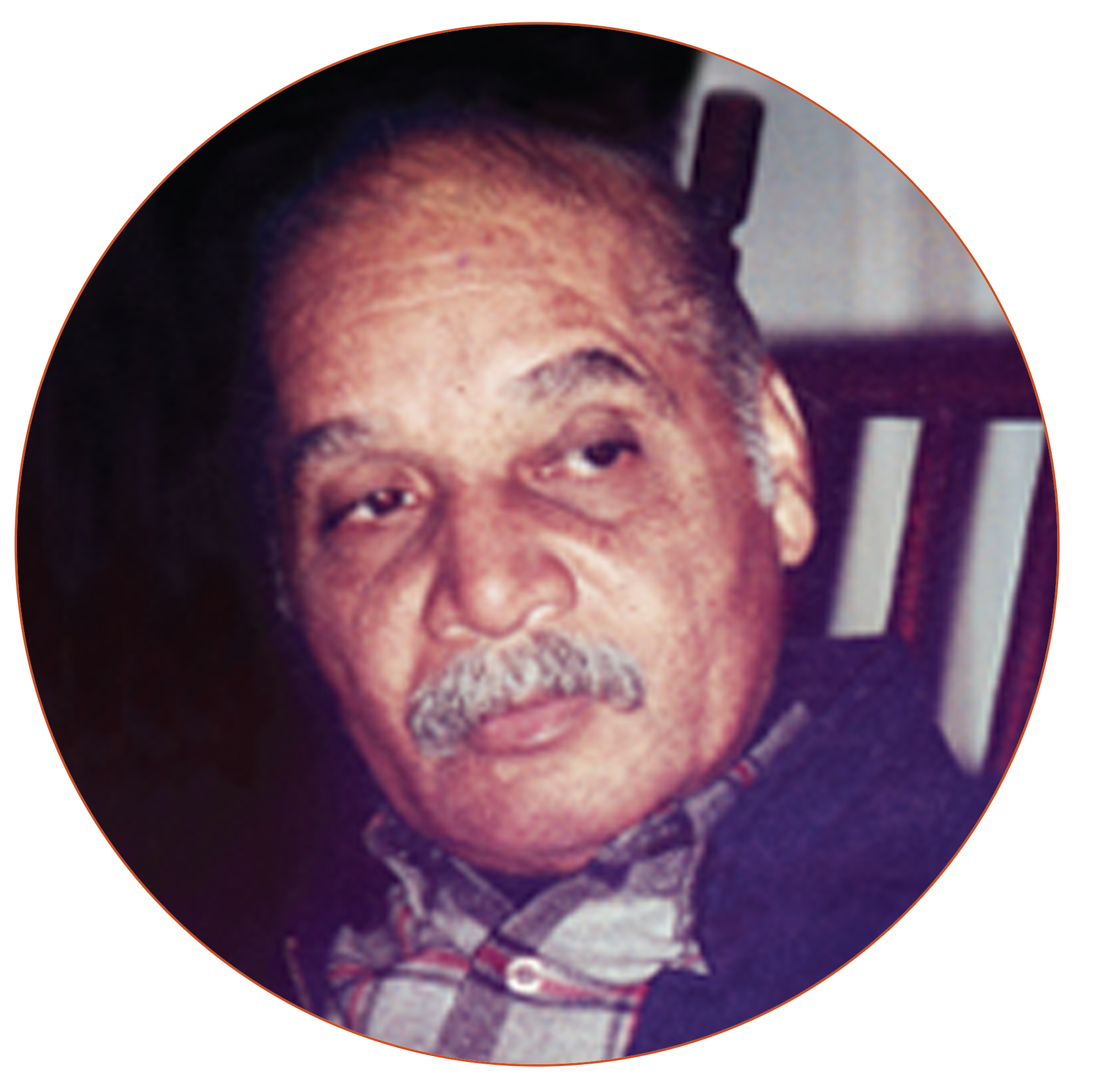
Life Story
José João Craveirinha was born on May 28, 1922, in Lourenço Marques today Maputo, the capital of Mozambique and died on February 6, 2003.
His remains lie in the crypt of Heroes Square in Maputo. He was a journalist for many years, having used the pseudonyms of Mário Vieira, J.C., J. Cravo, Jesuín Cravo, Abílio Cossa, José Mangachane, António Sousa and Jota Cê. He began his career in the newspaper The African and later-In the news and Tribuna.
It has abundant collaboration in the form of a chronicle and essay in the newspapers Notícias da Tarde, A Voz de Moçambique, Notícias da Beira, Diário de Moçambique, Voz Africana and in the magazines, Nova e na Tempo. Much of his poetry is still scattered in the press, not being included in the books he published in life. Another part remains unprecedented and is part of its bulky estate.
In addition to his work as a journalist and poet, he played a prominent role in Mozambique's sporting and associative life from the 1950s, having become President of the African Association's Directorate, an association that was an important focus of nationalist ideas.
In 1965 he was arrested by PIDE/DGS, accused of being part of a cell of FRELIMO's 4th political-military region, and was tried, convicted and served time until 1969.
After Mozambique's independence, it represented the country in several Writers' Meetings and Congresses. In 1979 the VI Conference of Afro-Asiatical Writers, held in Luanda, elected him Permanent Member of the Jury of the Lotus Prize. In 2002 he was elected a member of thecorrespondent of the Lisbon Academy of Sciences.
He was the first President of the General Assembly of the Association of Mozambican Writers, formed in 1982, a position he held until 1987. He was also President of the General Assembly of the Mozambican Association of Portuguese Language (AMOLP).
He served as Vice-President of the Olympic Committee.
The tutelary figure of Mozambican poetry is undoubtedly its most popular poet and the one that critics recognize as the African poetic hand of Portuguese expression, as well as one of the great poets of the Portuguese language.
His poems have been translated into several languages, is represented in dozens of anthologies of poetry, not only in English, French, Russian, Swaili, German, Italian, Spanish, Swedish, etc.
This recognition had its expression in the important international awards awarded to it, and of which stand out for its importance: "Alexander Dáskalos Award" of the House of Students of the Empire in 1962, "National Prize for Poetry of Italy" in 1975, "Lotus Award" of the Association of African Asian Writers in 1983, "Camões Award" in 1991, "Voices of Africa Award" of the Ordfront/Leopard Publishing House – Sweden, in 2002. In Mozambique he was awarded the Awards "Cidade de Lourenço Marques" in 1959, "Reinaldo Ferreira Award" and "Essay Award" of the Centro de Cultura e arte da Beira in 1961, "AEMO Literary Life Award" in 1997 and "Prémio Consecration Fundac-Rui de Noronha" in 1999. He was awarded by the President of the Federative Republic of Brazil in 1990 with the Grand Master of the National Order of the Southern Cruise. In 1997 he received the Order of Friendship and Peace from the President of the Portuguese Republic.
He was awarded the following medals: Nachingwea Medal, Gold Medal of the Commune of Concesio (Brescia), Gold Medal of the Municipality of Aljezur, Gold Medal 1st Degree of the Municipality of Sintra and Merit Medal of the State Secretariat of the
