
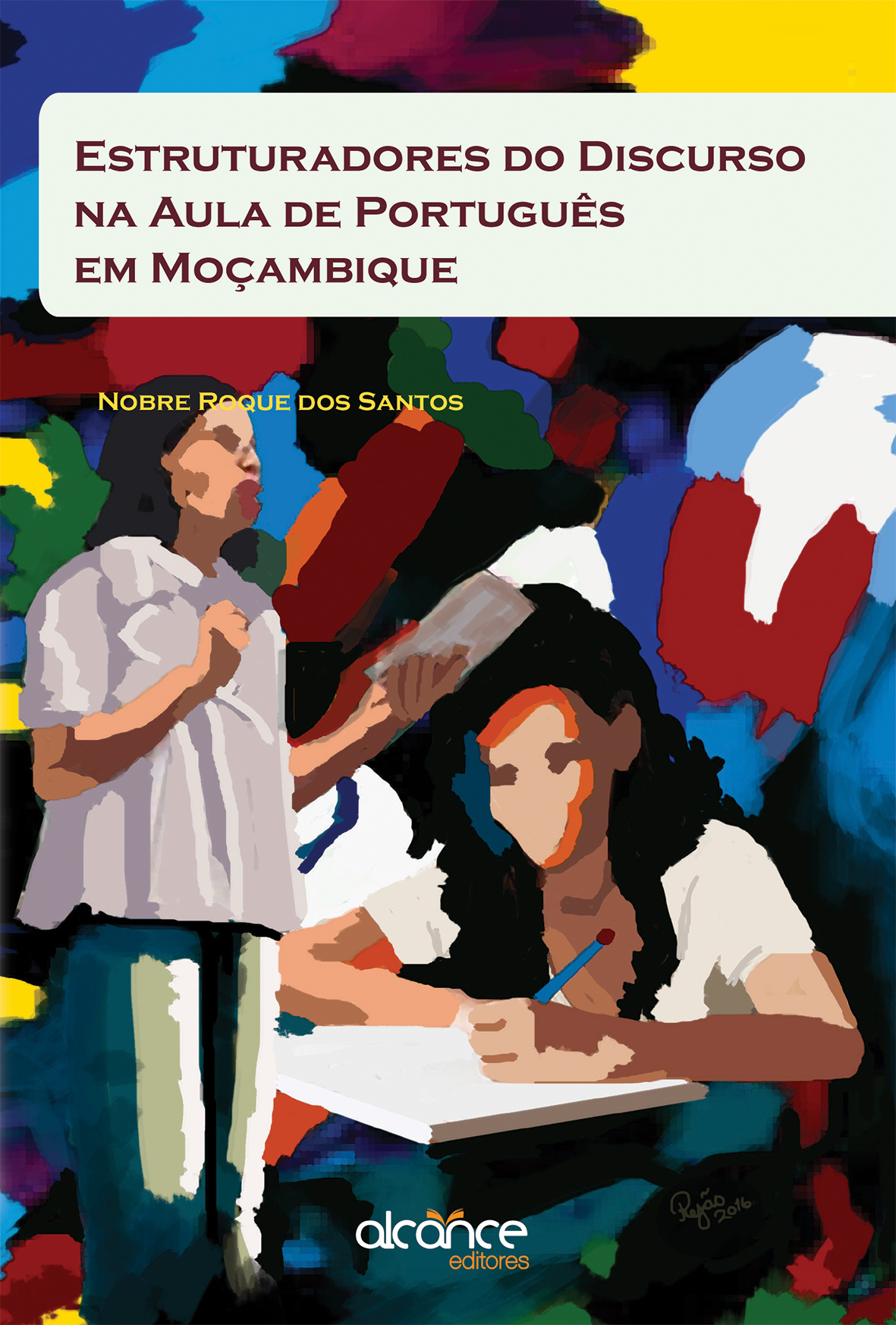
Discourse Structurers In the Portuguese Class in Mozambique | Noble Roque dos Santos
This book focuses on the use of speech structurers in verbal interaction, in a pedagogical context, in Mozambique. The study, inserted in the Linguistics Area, used theoretical references linked to Discourse Analysis, namely the French school (from Linguistics) and the Anglo-Saxon school (from Anthropology). Regarding the area of Linguistics, we sought the assumptions of Pragmatics, Sociolinguistics and Psycholinguistics. Regarding Anthropology, we followed ethnographic, ethnomethodological and interactionist approaches. This study included 15 teachers and 778 students from five secondary schools or similar schools from the cities of Beira, Maputo and Boane district (Moçambique), which included, among other things, the classes of the 1st and 2nd year of the commercial branch and 9th and 10th class of General Secondary Education. We observed 40 classes, of which 10 classes were transcribed and analyzed. The transcription and annotation were performed with the help of the Transcriber program. We used qualitative and quantitative methods and predominantly descriptive procedures. We identified 4700 discursive markers distributed in the following subcategories: discursive directive markers, discursive markers of confirmation, discursive markers of a factual and agreement nature and interjections as discursive markers. The results of this research allow us to conclude that discursive markers and disfluencies play functions related to textual-interactive structuring in the classroom. These linguistic phenomena, the structure


