
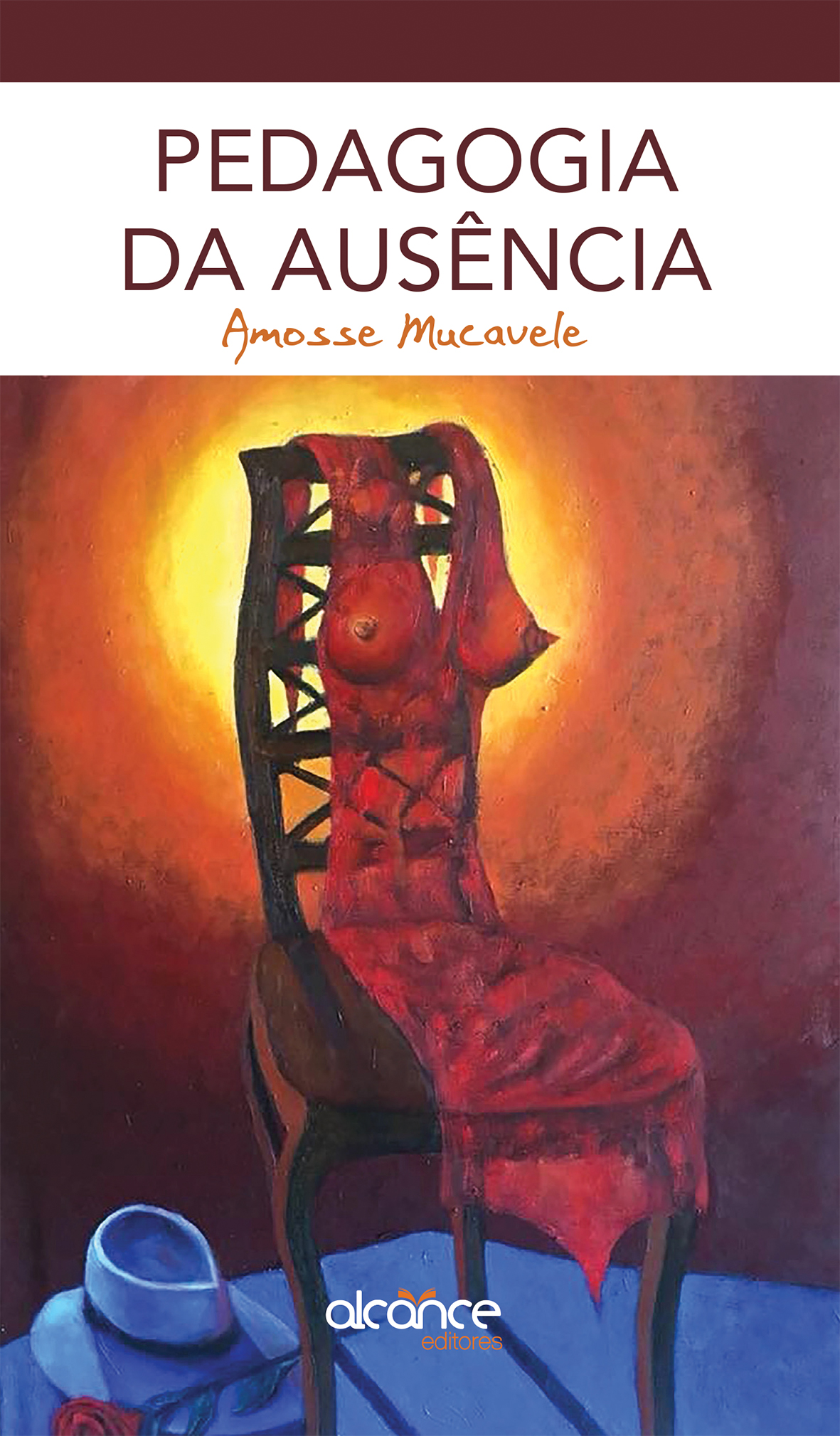
Pedagogy of Absence | Amosse Mucavele
If for Achile Mbembe death appears as an instrument of control of power, for Amosse Mucavere it is an indispensable tool in the engineering of psychic construction for serving as a bushel that houses the flame of relation-sensitive existence at a time when the dictatorship of industrialization of everything is watched.
Jessemusse Cacinda, editor and journalist
Amosse is an antennated poet, attentive to the paths followed by contemporary poetry. And that's very important. His dialogue with the voices and tendencies of new poetry is permanent. And this dialogue extends to Brazilian poetry, perhaps more specifically to the poetry of poets such as Cláudio Willer and Cláudio Daniel, marked by the presence of surrealism and a very strong neo-barroquism. It is a poetry that spreads, in both poems in verses and in poetic prose. If I am not mistaken, there is also dialogue with the poetry of the second half of the twentieth century, still surrealistic.(...) We can say that in this case there is a conscious connection with tradition, more clearly with what is called "the tradition of the new". All this gives the poetry of this Mozambican poet a character of estrangement, which elevates us above everyday reality.
Geraldo Lima, Writer and Professor of Literature.
The book Pedagogy of Absence, by the poet Amosse Maculuve, proposes to make this reflection and certainly does so by agreeing with the poet Caesar Leal when he says that "the seen in the light of the dream refuses to be mute."
It is a work in two (p)arts: Seminar on places and migrations whose general title and subtitles bring the question of memory to light. They are also different forms of experimentation of a poetic stylistic. If we try with Mucavele to reframe the word memory to leave it close to the face idea that in actions and speech, in an atopic and acronym way, mnemosyne trasmutes, the thread of history soon imposes itself to enroll everyone in the field of the human.
Virginia Leal, Full Professor of Linguistics, working in the Postgraduate Programs in Literature and Human Rights, both at UFPE.
PhD in Semiotics and Linguistics (USP/Université Paris X).


